What the Tide Left
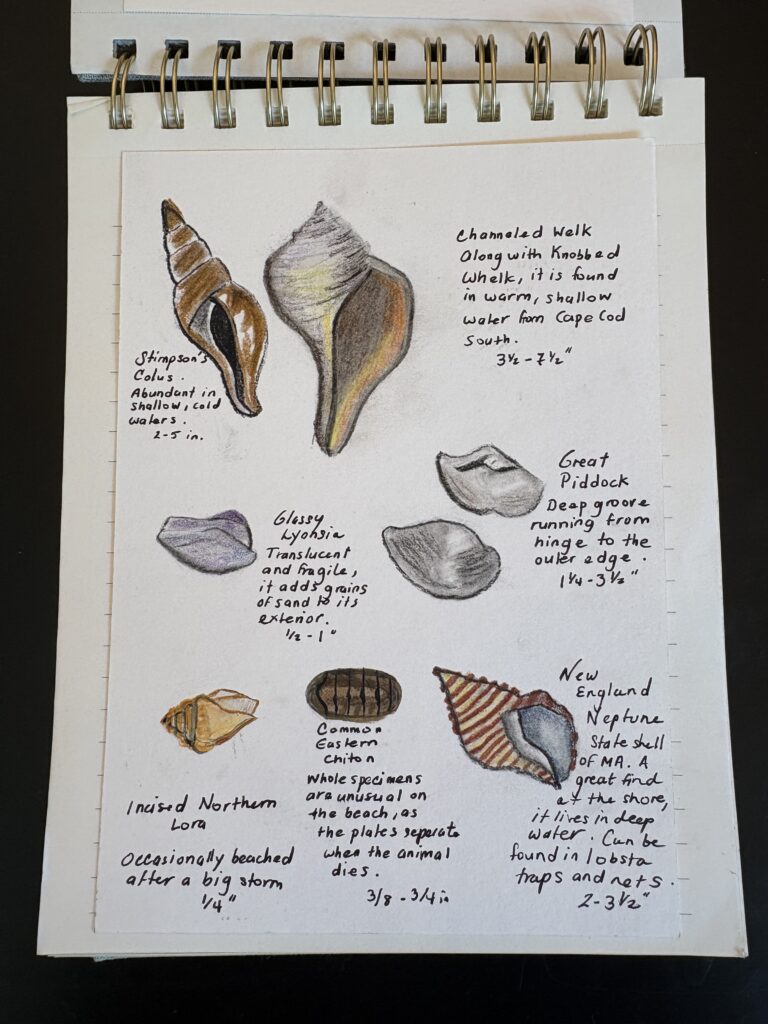
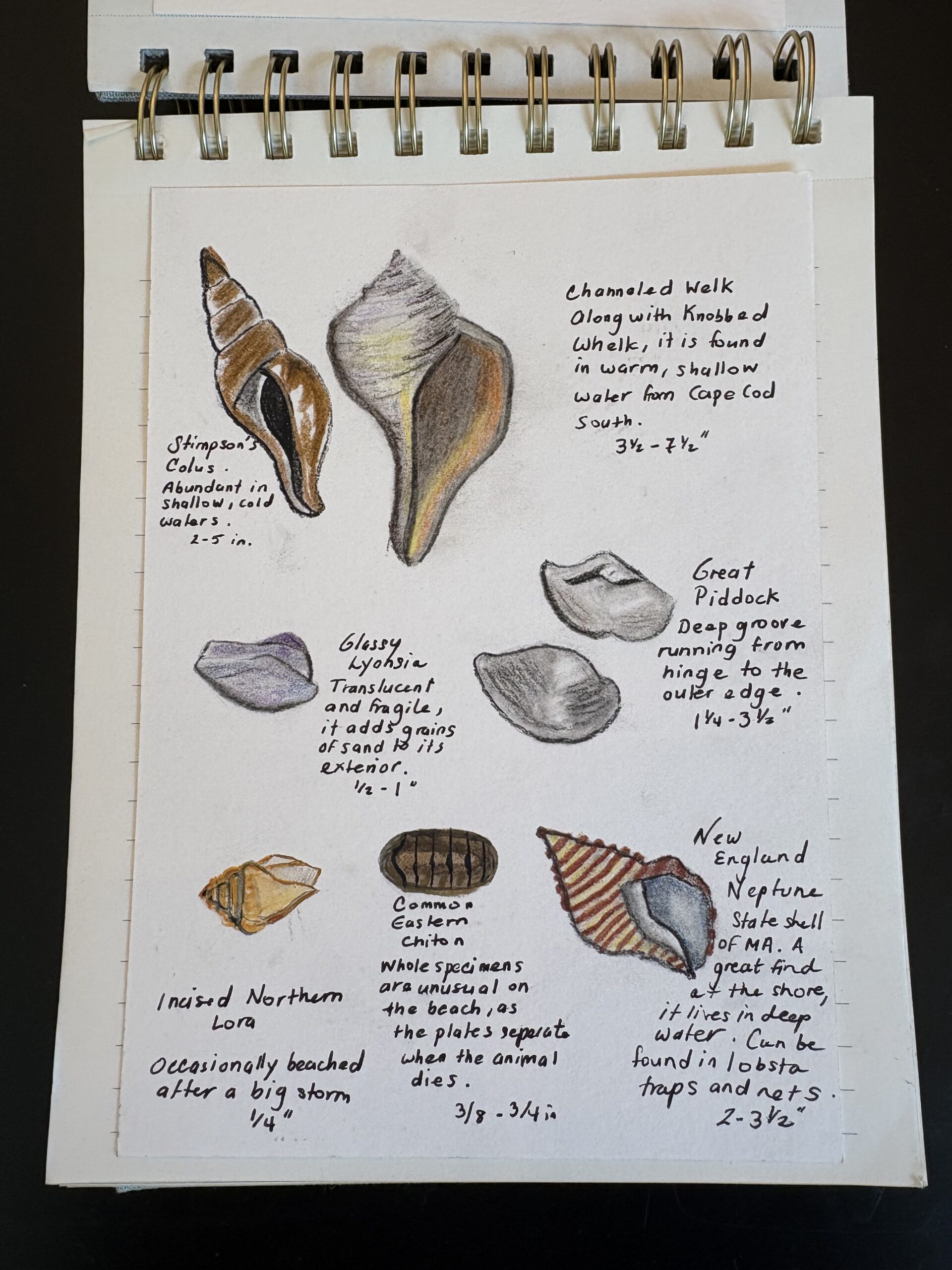
This page is a different kind of field note — not one animal but seven, or rather the architecture seven animals left behind. Every shell on a beach is a record of a habitat you can’t visit: cold shallows, deep water, the inside of a clay bank. The wrack line is where unreachable worlds file their reports.
The specimens
Stimpson’s Colus — Abundant in shallow, cold waters. 2–5 in. A northern whelk, spiral built for the cold.
Channeled Whelk — Along with the Knobbed Whelk, found in warm, shallow water from Cape Cod south. 3½–7½ in. The channeled grooves along its sutures give it the name; its egg cases — long papery chains of disks — wash up looking like something from another planet.
Glassy Lyonsia — Translucent and fragile, it cements grains of sand to its exterior. ½–1 in. A shell so thin it armors itself with the beach.
Great Piddock — Deep groove running from hinge to the outer edge. 1¼–3½ in. Piddocks are borers: they use the rasped edge of their own shell to grind burrows into clay, peat, even soft rock, and spend their whole lives inside the hole they made.
Incised Northern Lora — Occasionally beached after a big storm. ¼ in. You essentially never meet this one unless the weather delivers it.
Common Eastern Chiton — 3/8–3/4 in. Whole specimens are unusual on the beach, because the eight plates separate when the animal dies. The armor holds together only while something is alive inside it.
New England Neptune — The state shell of Massachusetts, and a great find at the shore, because it lives in deep water. Comes up in lobsta traps and nets. 2–3½ in.
Field notes
- Notice the sorting: three of these seven — the Lora, the Neptune, the whole chiton — almost never reach a beach on their own. It takes a storm, a trap, or luck.
- The Glassy Lyonsia and the Great Piddock are opposite answers to the same problem of being soft in a hard world: one glues the beach to itself, the other digs into the land and never leaves.
Reflect
The chiton is the one I keep thinking about. Eight interlocking plates, flexible, armored, seemingly built to last…and the moment the animal dies, the whole assembly lets go. What looked like structure was actually life, organized. The armor never held the animal together; the animal held the armor together.
It’s a good thing to remember about our own architectures — the routines, the roles, the impressive interlocking plates of a life. They cohere because something alive inside is doing the holding. Tend the animal, not just the armor.
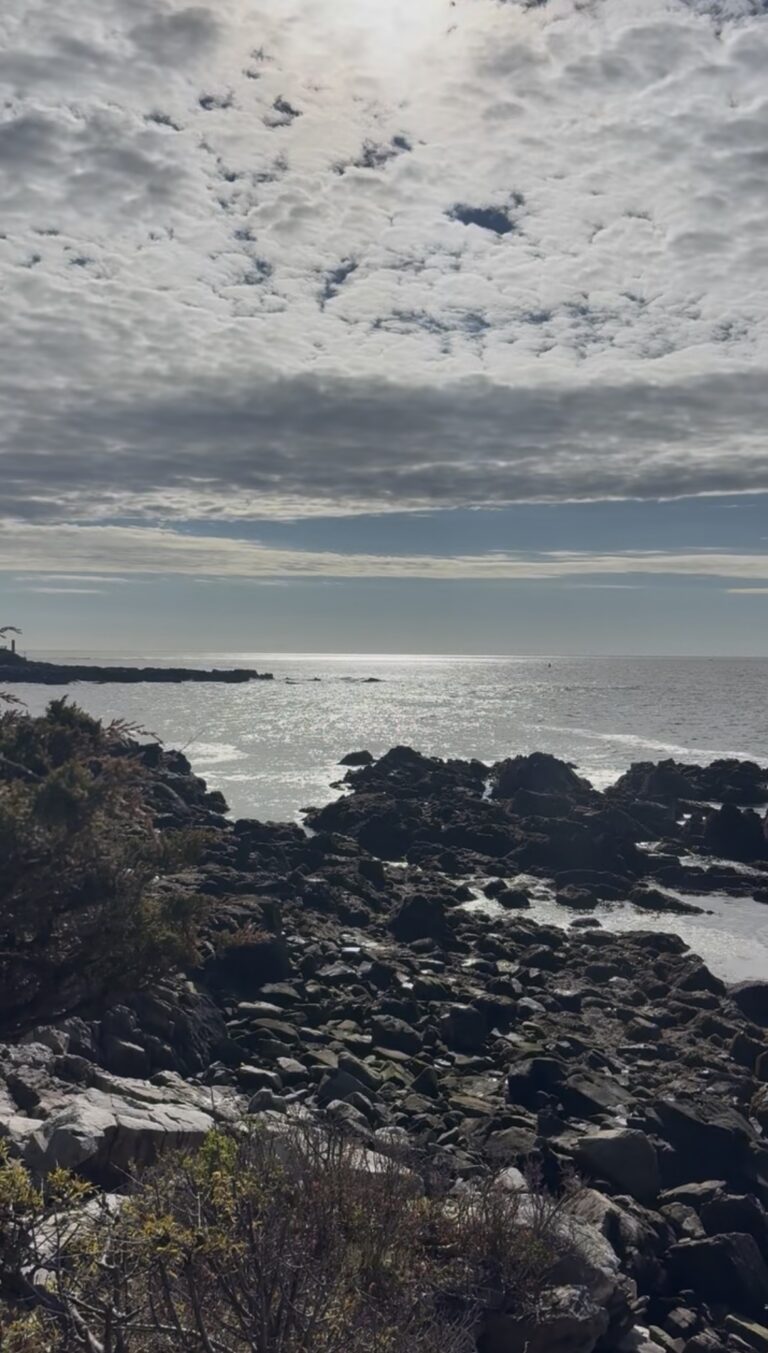
And maybe that’s the deeper pleasure of beachcombing, why it settles the nervous system the way it does. You walk slowly, eyes down, attention wide and soft, and the sea hands you evidence of lives lived entirely out of view — deep water, cold water, inside the clay. You can’t visit those worlds. But if you show up at the boundary often enough, and pay attention, the world will send its word.
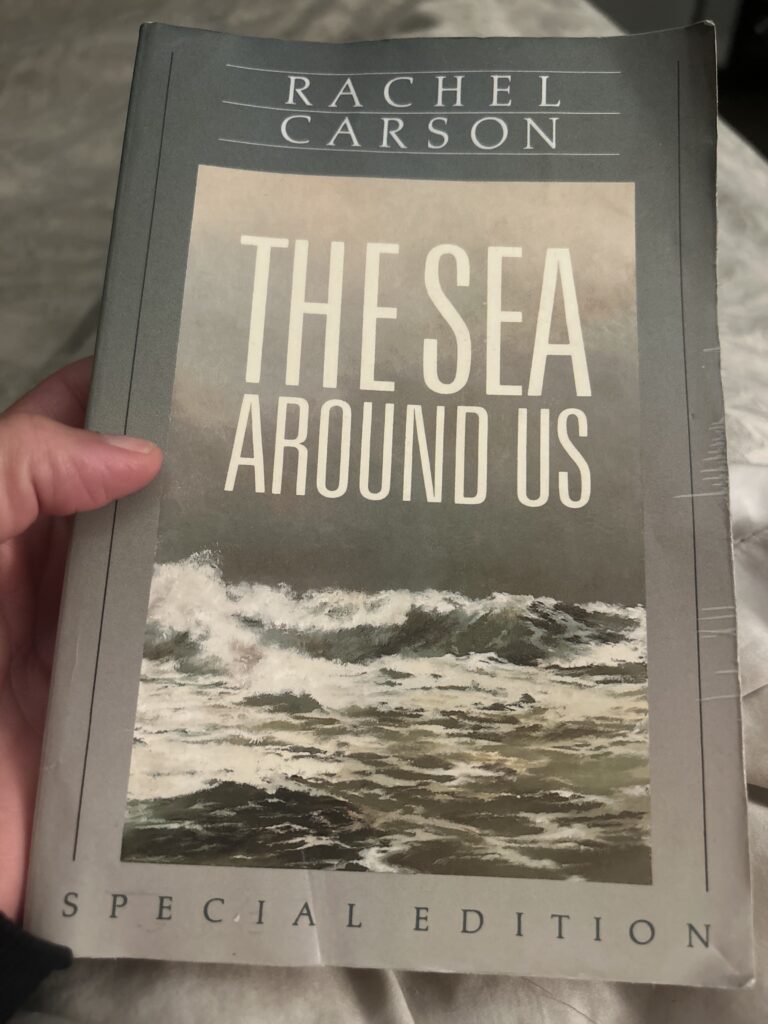
Rachel Carson validated all the wonder I had inside me. I’d often wondered why people weren’t as enamored as I was, and in that way I always felt a little odd, a little out of place, but in Rachel I had a soul sister. She inspired me to think about how to properly honor what I’m looking at, and how to sit inside its mystery instead of rushing to explain it away. What I keep learning from her is that you don’t have to choose between knowing something and being moved by it. The knowing is what makes the wonder deeper. She also made me a different kind of mother. I’ve spent years exploring with my kids because of her: turning over shells, following a bird, hiking trails and trying to name the mushrooms. These field notes come from that same impulse.