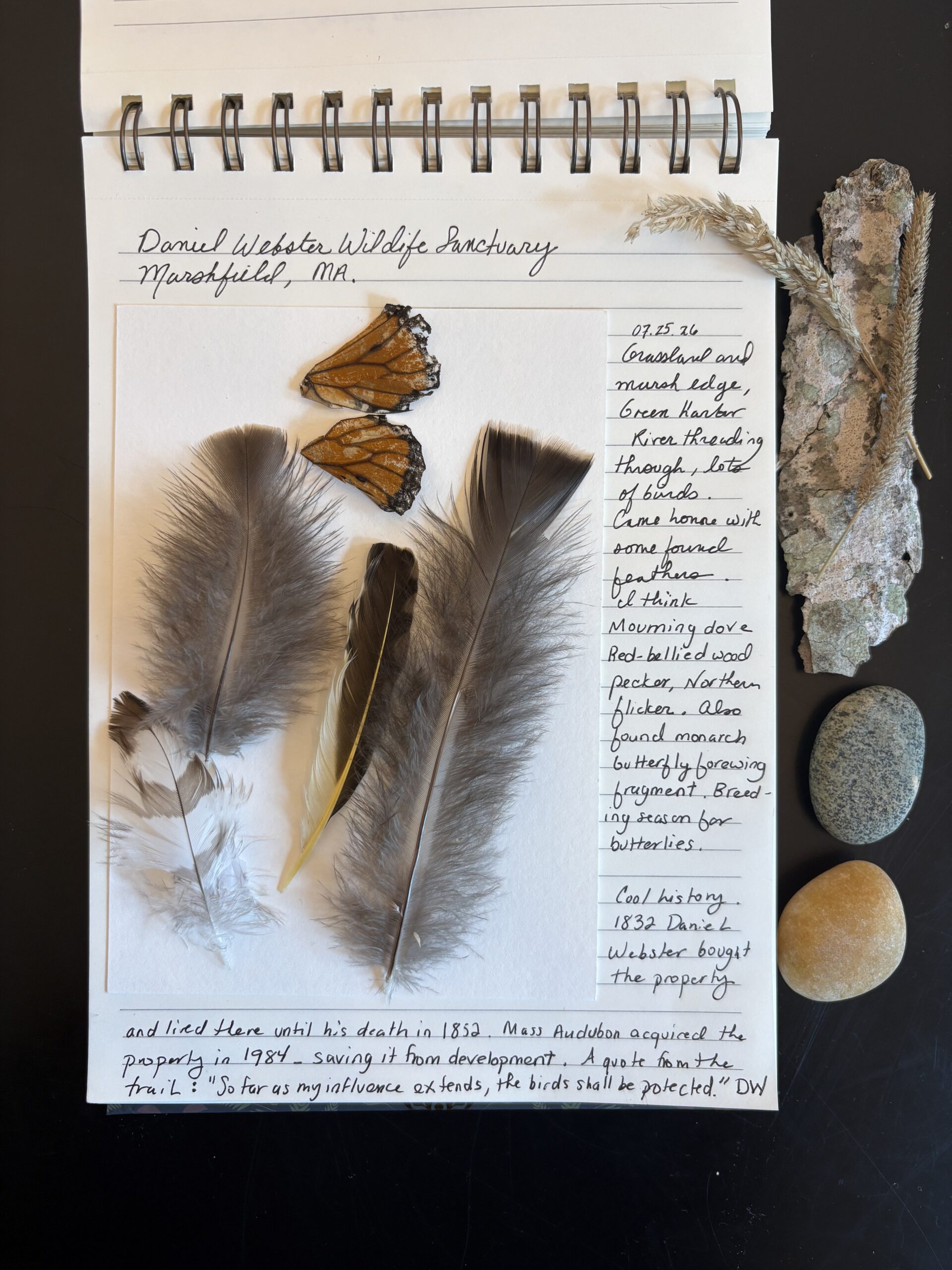
Daniel Webster Wildlife Sanctuary
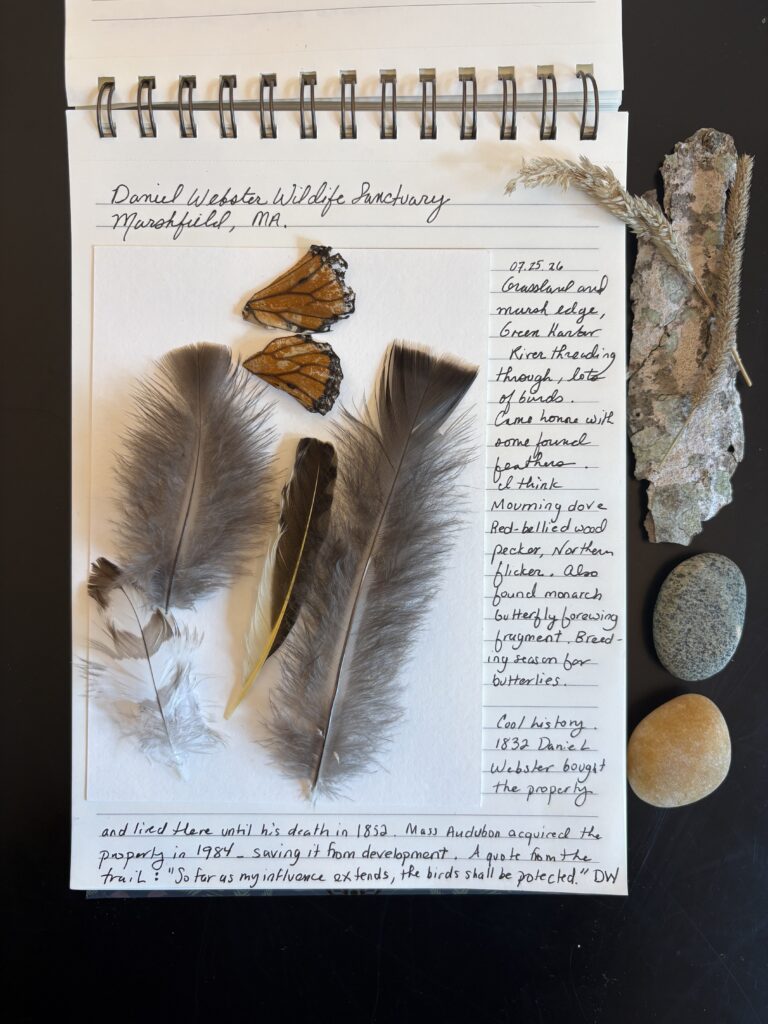
Found today
Feathers (best guess using naturalist and my own eye)
| No. | Color / pattern | Best guess | Confidence |
|---|---|---|---|
| 1 | Soft dusky gray-brown, fluffy base, no barring | Mourning Dove (body feather) | Likely |
| 2 | Even black-and-white ladder barring | Red-bellied Woodpecker back feather (or Northern Flicker) | Possible, to confirm |
| 3 | Gray outer web with a glowing pale-yellow shaft and inner web | Northern Flicker, yellow-shafted form | Likely |
| 4 | Pale cream down, mostly fluff, little pattern | Underbody down, source unclear | Uncertain |
I know that under the Migratory Bird Treaty Act, keeping feathers from most native species is technically restricted, so I won’t plan to keep these long term.
Also found: a monarch butterfly forewing fragment, orange with the unmistakable black veining. A poignant one for late July, right in breeding season.
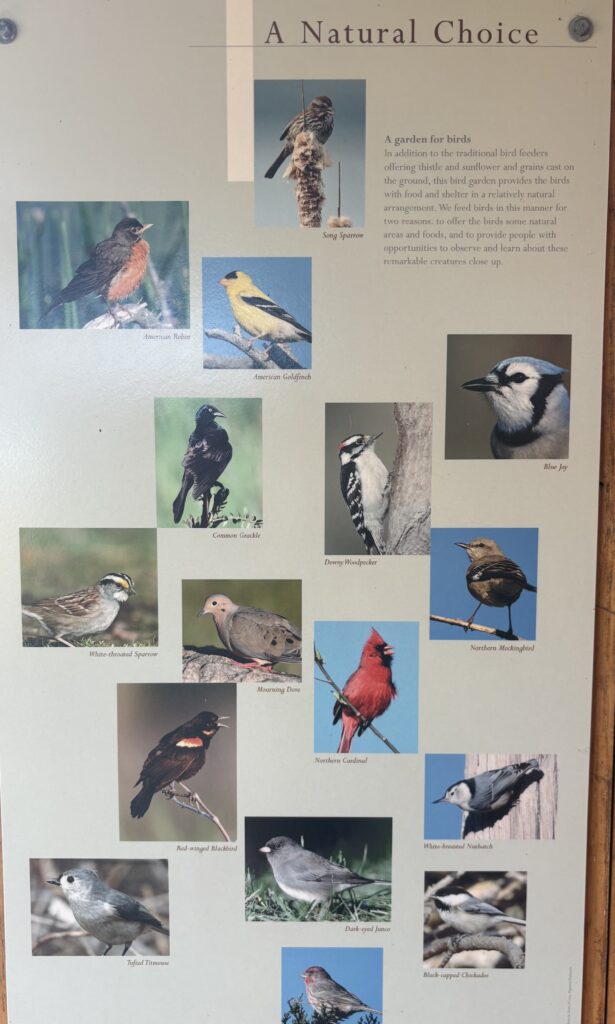
Birds recorded here (from the sanctuary’s garden board)
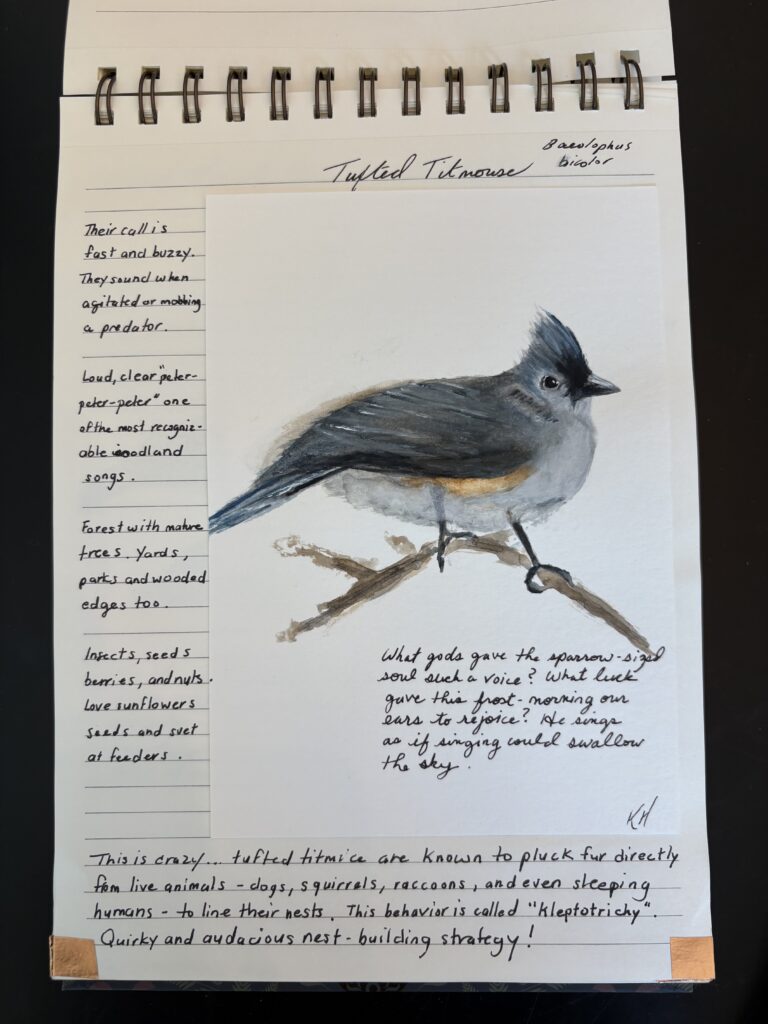
Song Sparrow, American Robin, American Goldfinch, Common Grackle, Downy Woodpecker, Blue Jay, White-throated Sparrow, Mourning Dove, Northern Mockingbird, Northern Cardinal, Red-winged Blackbird, White-breasted Nuthatch, Tufted Titmouse, Dark-eyed Junco, Black-capped Chickadee, House Finch.
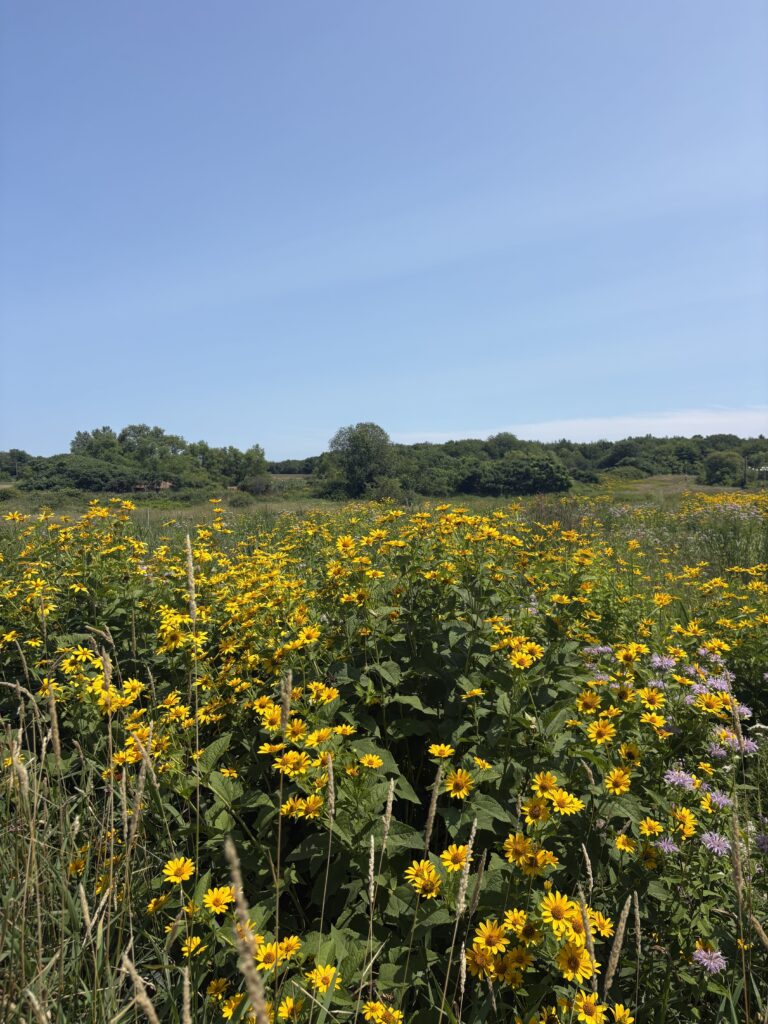
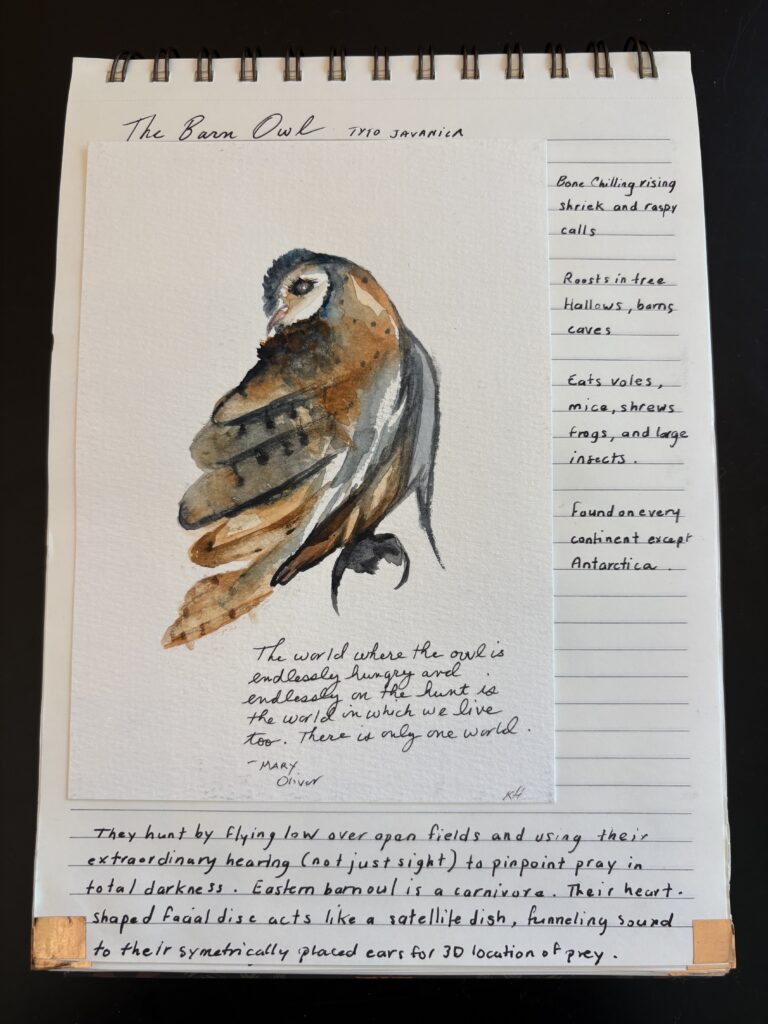
The grasslands themselves are managed for two headline groups: summering grassland nesters (Bobolinks and Tree Swallows among them) and wintering birds of prey (Rough-legged Hawks, Northern Shrikes, and owls hunting the voles in the fields).
A little history of this land
In 1832 the statesman Daniel Webster bought the Thomas estate and kept it as his summer home until his death in 1852. The most dramatic change to the landscape came in 1872, when farmers built a dike across the mouth of the Green Harbor River to close off the tide. Roughly two square miles of salt marsh became the upland pasture, swamp, and river we all get to walk today. That dike still holds the salt back, and the town of Marshfield manages it, keeping the river surface a couple of inches below sea level so the grassland stays grassland.
Mass Audubon acquired the property in 1984, saving it from development after a decade-long community campaign led by Dorothea Reeves and the Committee to Preserve Dwyer Farm.
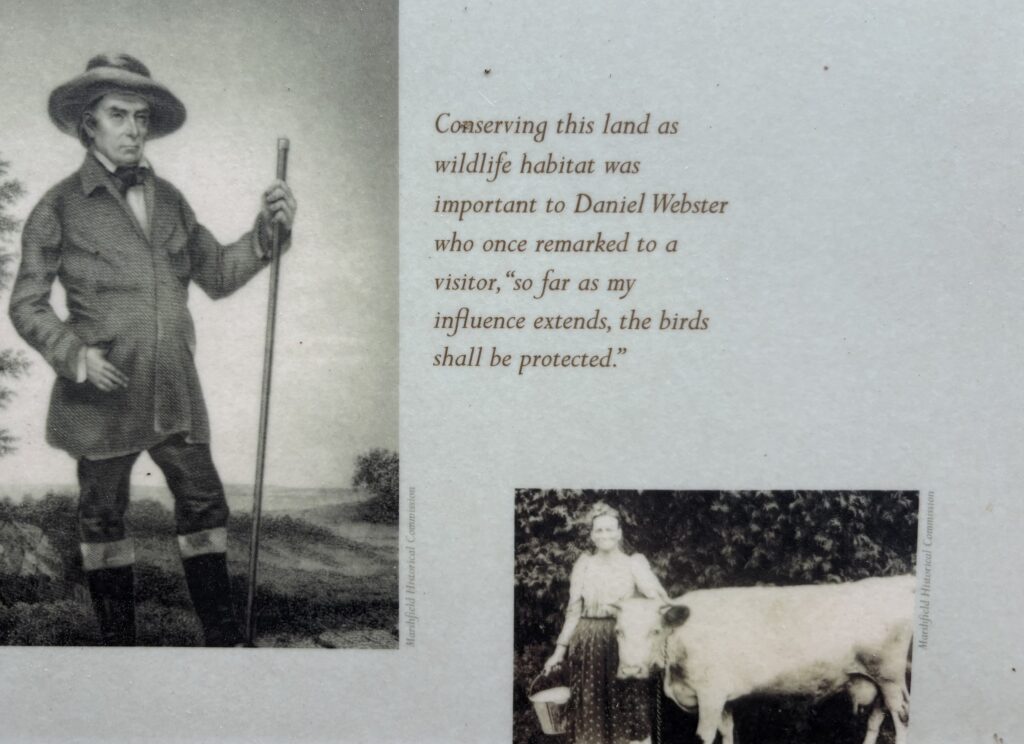
On his attachment to this coast, echoing the old myth of Antaeus, who grew strong each time he touched the earth: the same effect, Webster said, was produced in him by touching the salt seashore. And the line the sanctuary keeps on its sign (pictured above), spoken to a visitor about this very land:
“So far as my influence extends, the birds shall be protected.”
Not a bad motto for a place that became a bird sanctuary a century and a half later ☺️